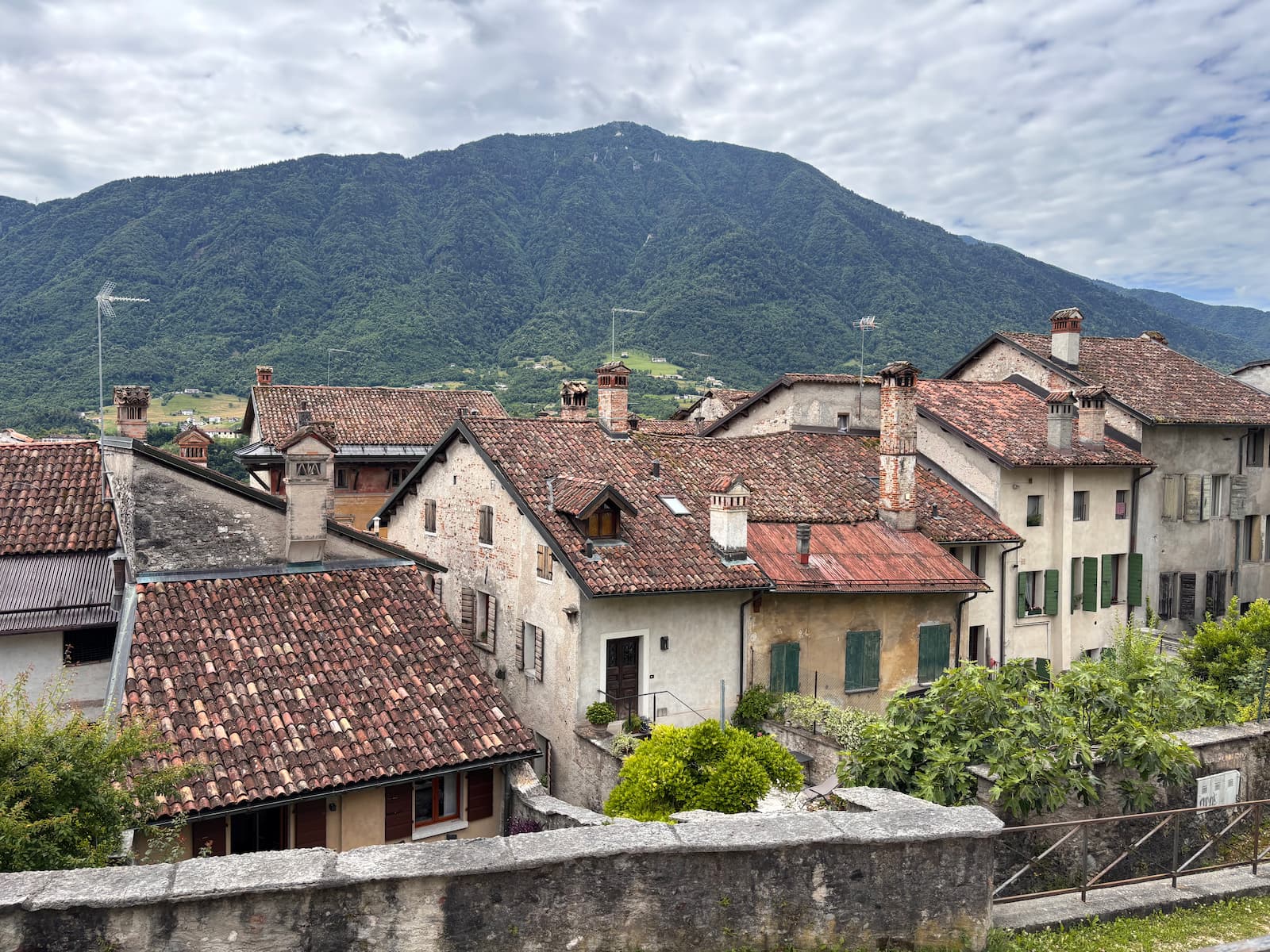
Recently my wife and I took a two-day trip to Veneto, wanting to discover the place our families came from when they emigrated to Brazil around 150 years ago. We didn't have a tight plan, just a list of towns and surnames, but that was more than enough for a good time.
It ended up being a very enriching trip, with lots of history, beautiful landscapes and cemeteries.
Bassano del Grappa
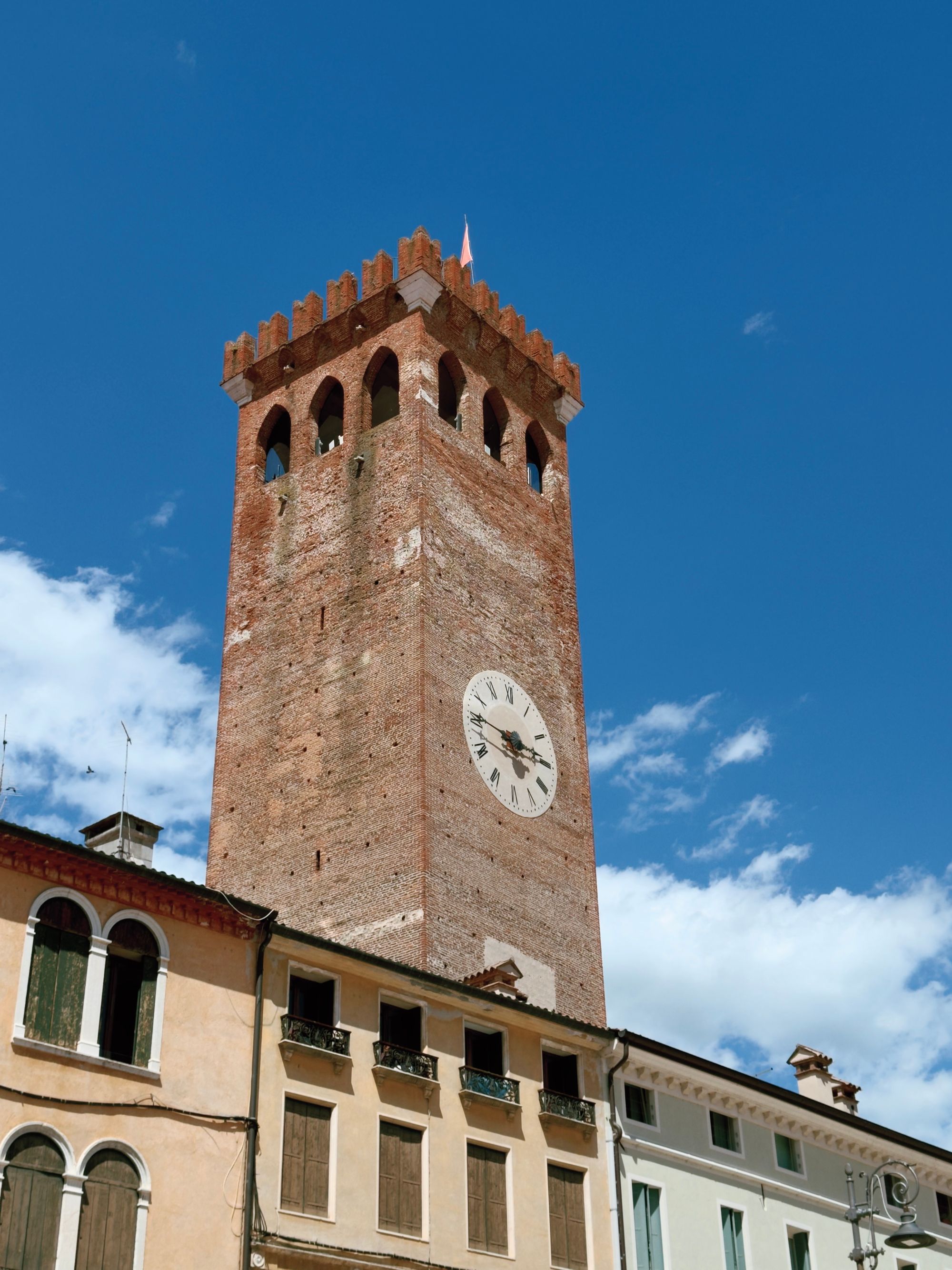
Our first stop was in Bassano del Grappa, after a 3-hour drive. This one has no relation to our family, but it's a really nice town which we had visited before and wanted to see again. We crossed the Ponte Vecchio, a historic landmark that was first built in 1209, but has been destroyed and rebuilt many times since then.
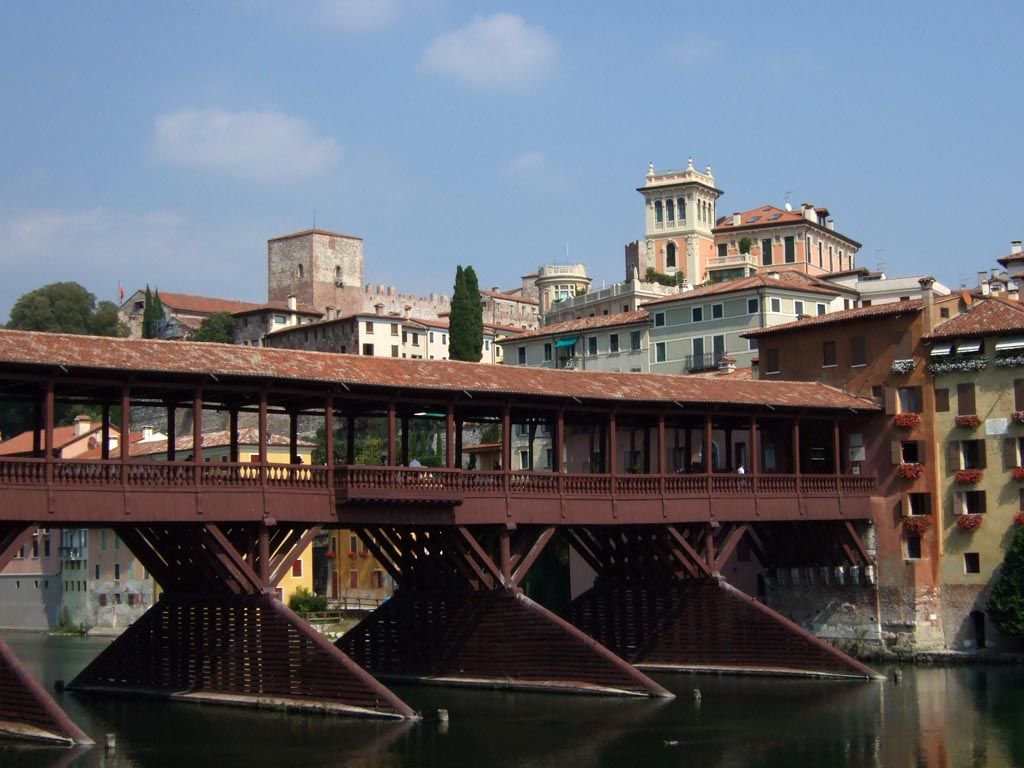
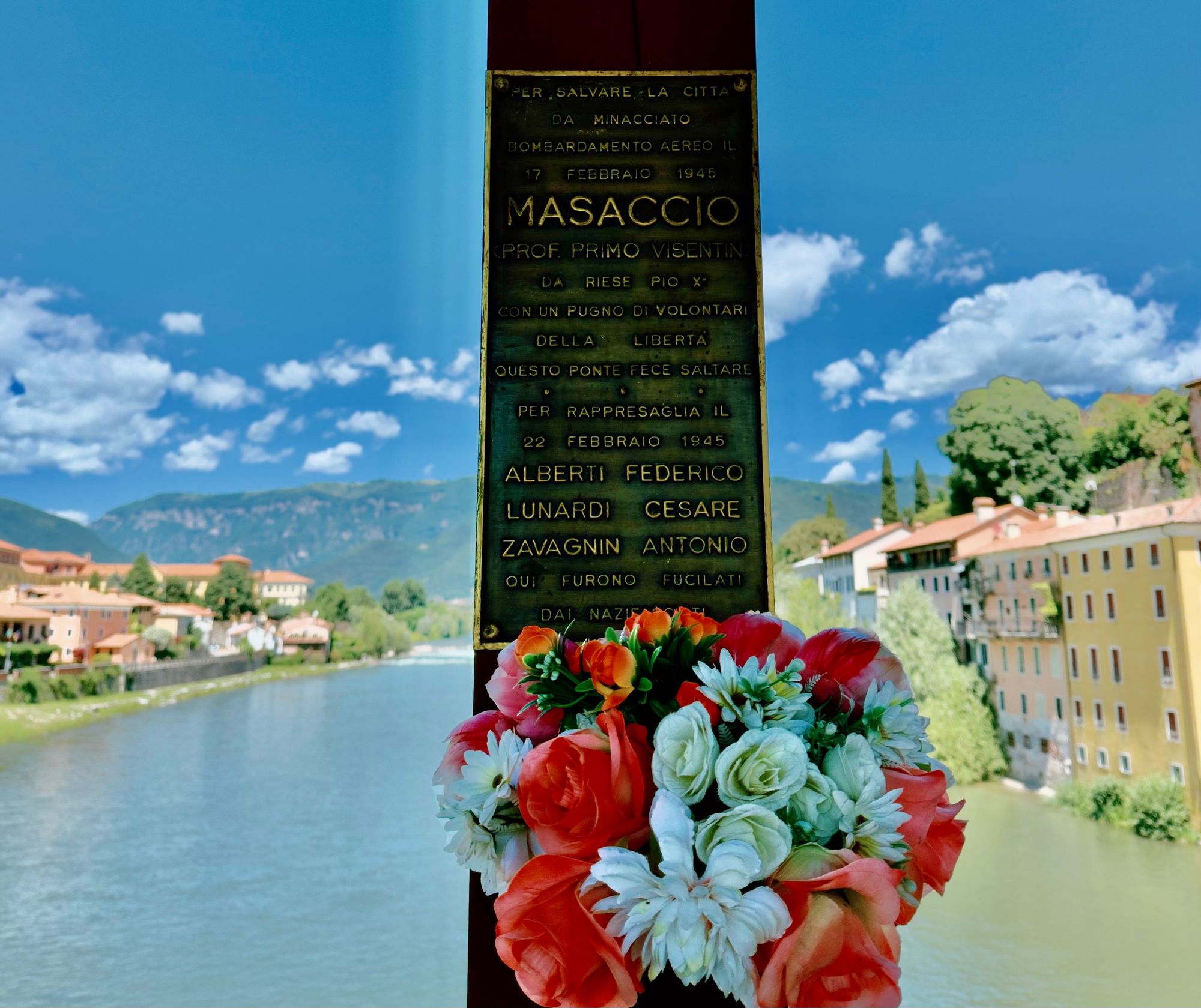
The most recent destruction is the most memorable: in 1945, a group of Partisans (anti-fascist militias) blew up the bridge as part of a plan to hinder Nazi logistics in the region and, as a result, stop the town of Bassano from being bombed. Some of them were executed by the Nazis as retaliation, and today there's a plaque on the bridge paying homage to them.
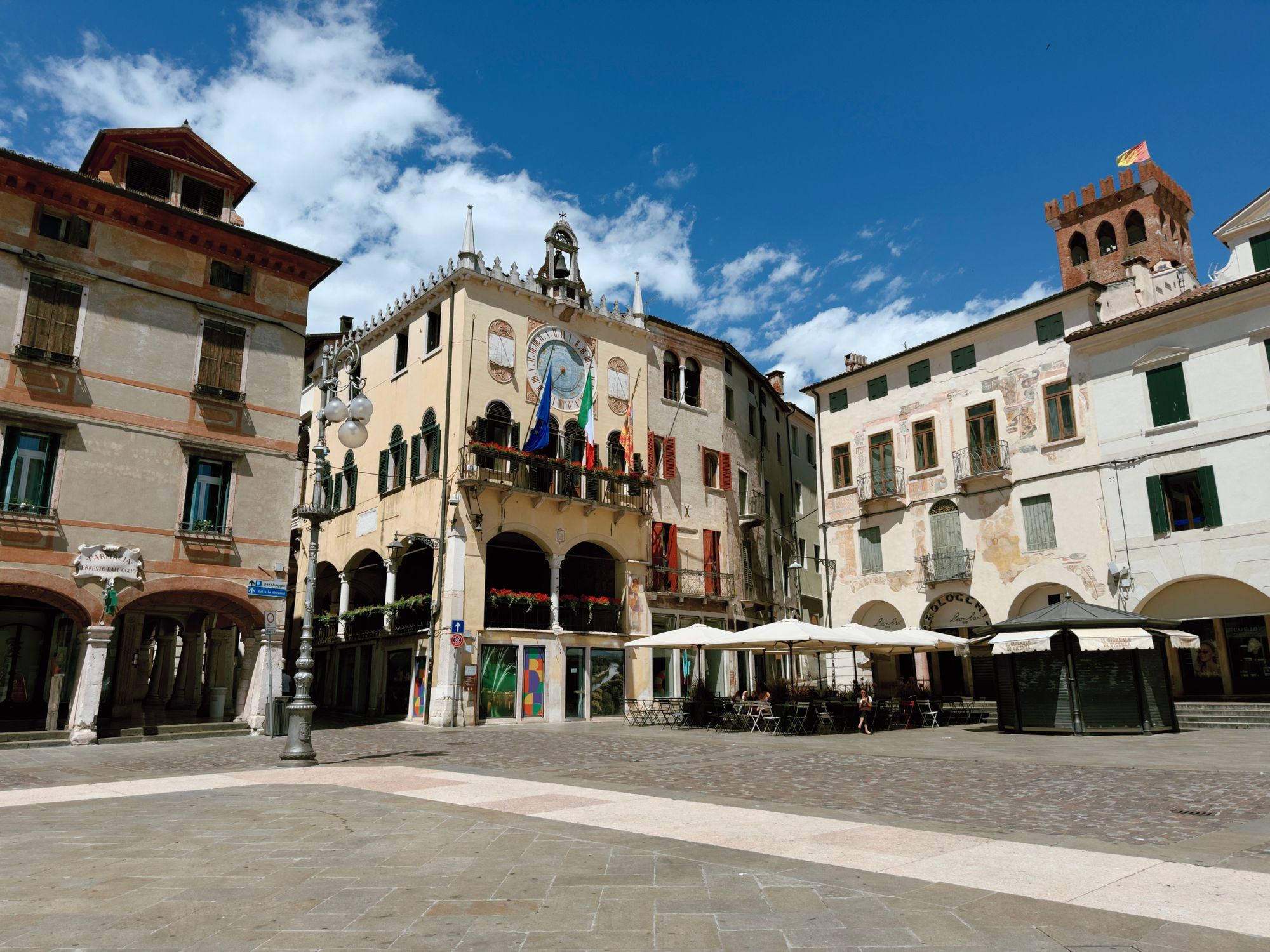
We had lunch, then walked around in the town center, passing through the old castle and the two main town squares.
Cartigliano
This town is just outside Bassano and is where the Mazzochini (my mother's side of the family) came from, though it was spelled Mazzochin back then.
Sadly, not much to show from this one. We didn't see much from the town itself and only found a couple of Mazzochin names in the cemetery, which was not enough to build a better picture of what life was like back there.
We got back in the car for a 45min drive towards our next destination.
Seren del Grappa
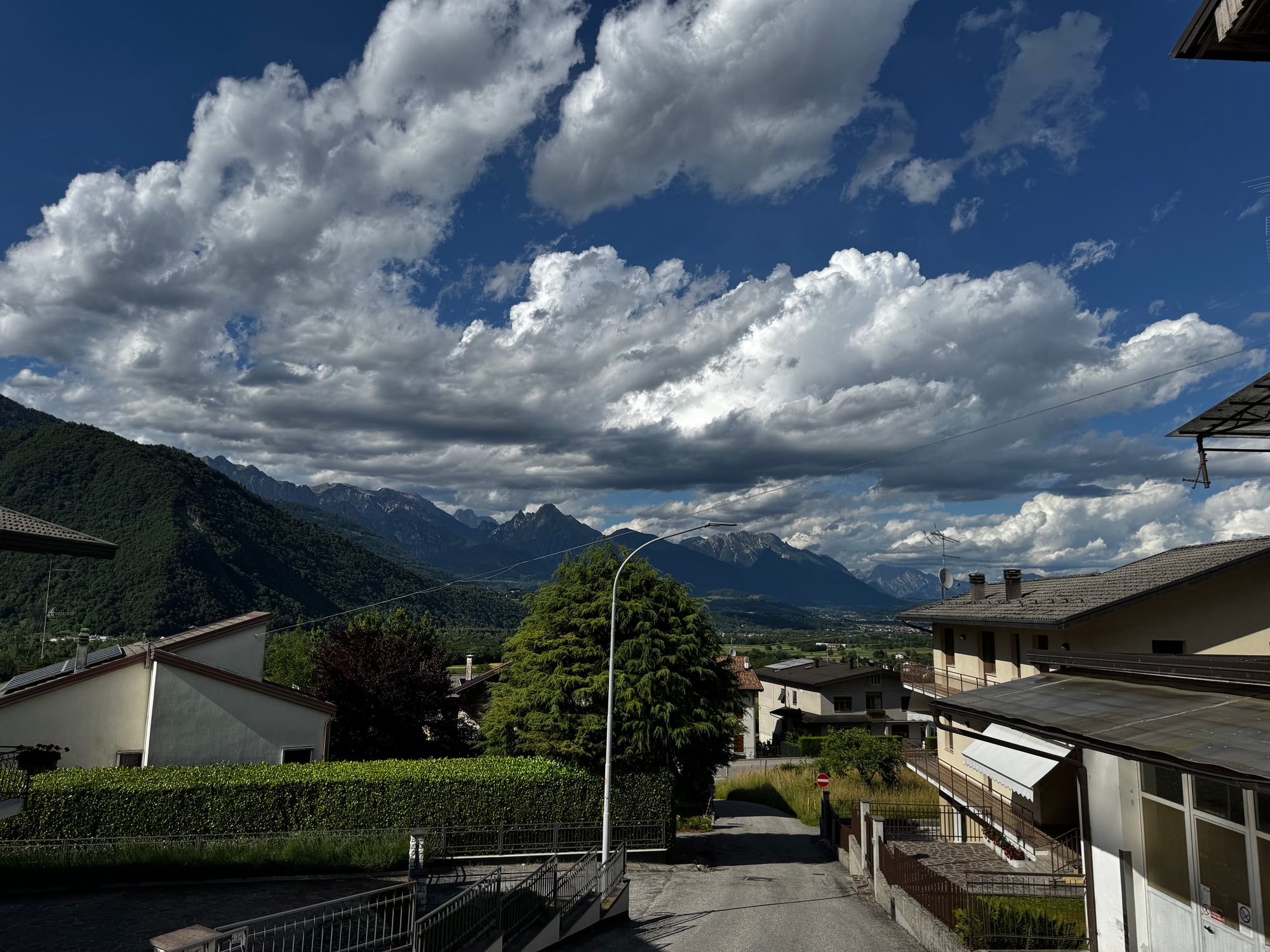
Seren was the birthplace of the Fantinel family — or at least the branch that emigrated to Brazil and ended up with me in it. The drive there was beautiful, with the road nestled in a valley between the mountains with a great view of the Dolomites.
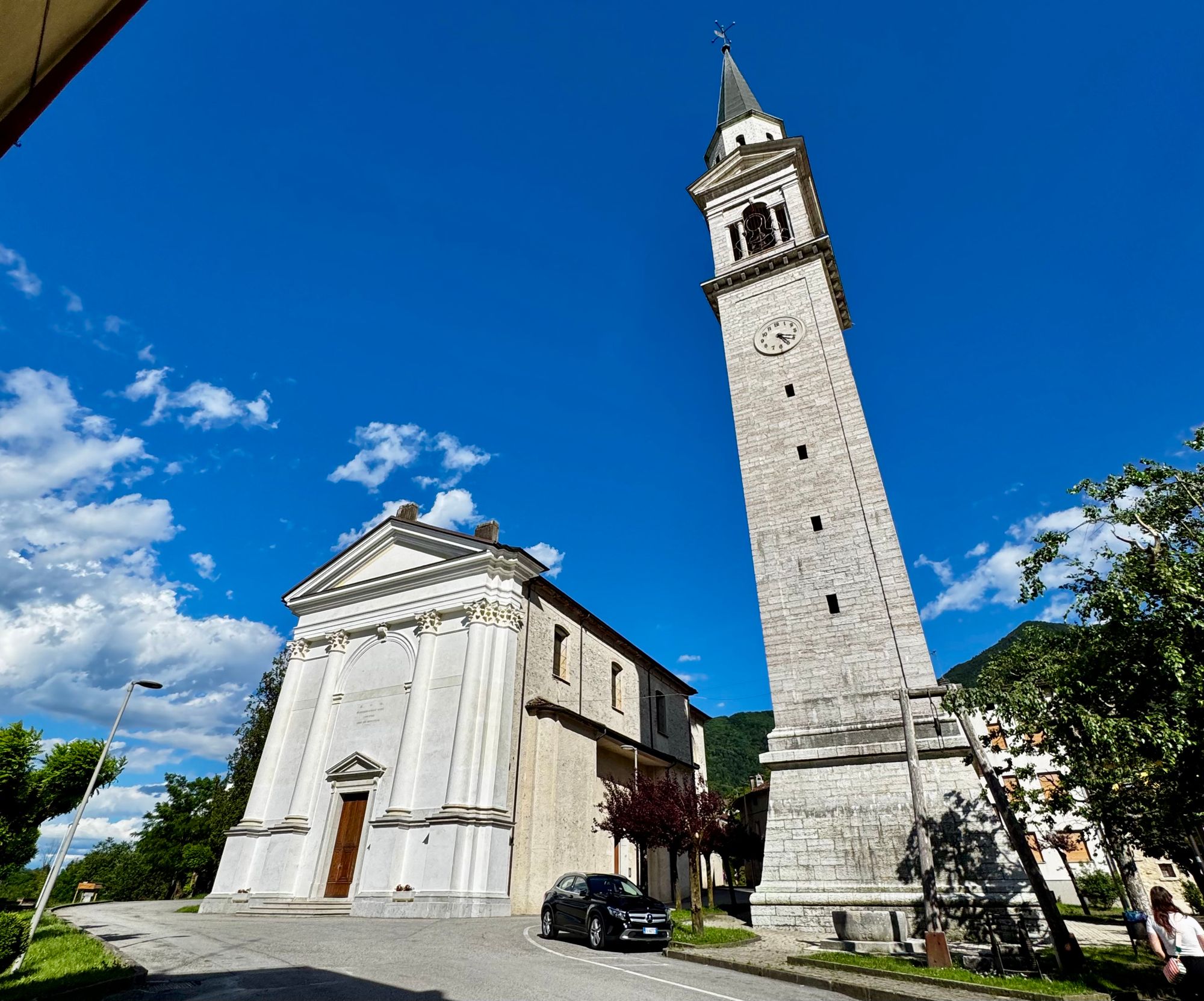
The town itself is tiny but really charming. The buildings are well kept and the church tower is quite a sight. On the horizon, you can see the pointy Dolomites and I now realize that liking mountains runs in the family.
We parked our car at the town entrance and walked for about 15min to the town's cemetery, passing houses with open gardens and plantations along the way. People seemed pretty curious about the two strangers wandering through.
In the cemetery, we found a handful of Fantinel graves, but the real surprise was that it felt like 80% of the surnames there were either Scopel or Rech — two family names that are really easy to find back in Serra Gaúcha, where I come from. We even found a plaque around town with a QR Code that supposedly led you through the story of the Scopel family's migration to Brazil, but sadly the website it took us to is currently under maintenance. It'd have been cool to hear the story of the migration from the side of those who stayed rather than the other way around.
Feltre
To close out the day, we drove about 15 minutes to Feltre, a somewhat larger town in the same area. We had booked a night in a nice villa around there, but before bed we took a walk around town.
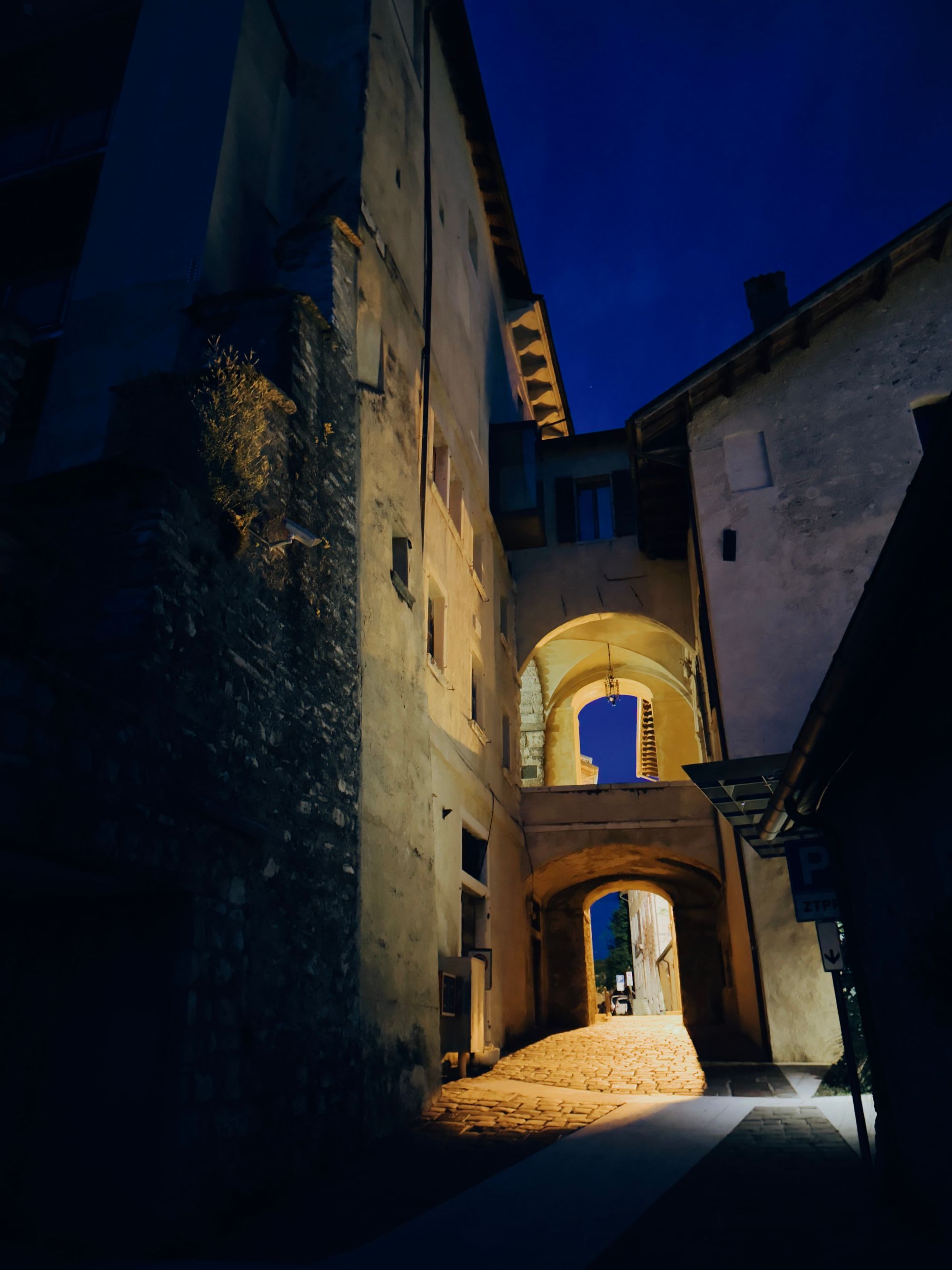
Turns out Feltre has a genuine somewhat-well-preserved medieval town center! It's in the less lived-in walled area of the town, which sits on top of a hill, around which modern Feltre later grew. I read that the walls and most of the buildings inside it were built in the 16th century, after the previous town was destroyed in a war (Feltre itself has been a town since at least 49 BC).
The night walk was a vibe. There wasn't a single living soul in the streets, and as it was getting dark, there were only a few spots with artificial light to set the mood. There was a biking event going on nearby with music, but it was distant enough not to be a distraction.
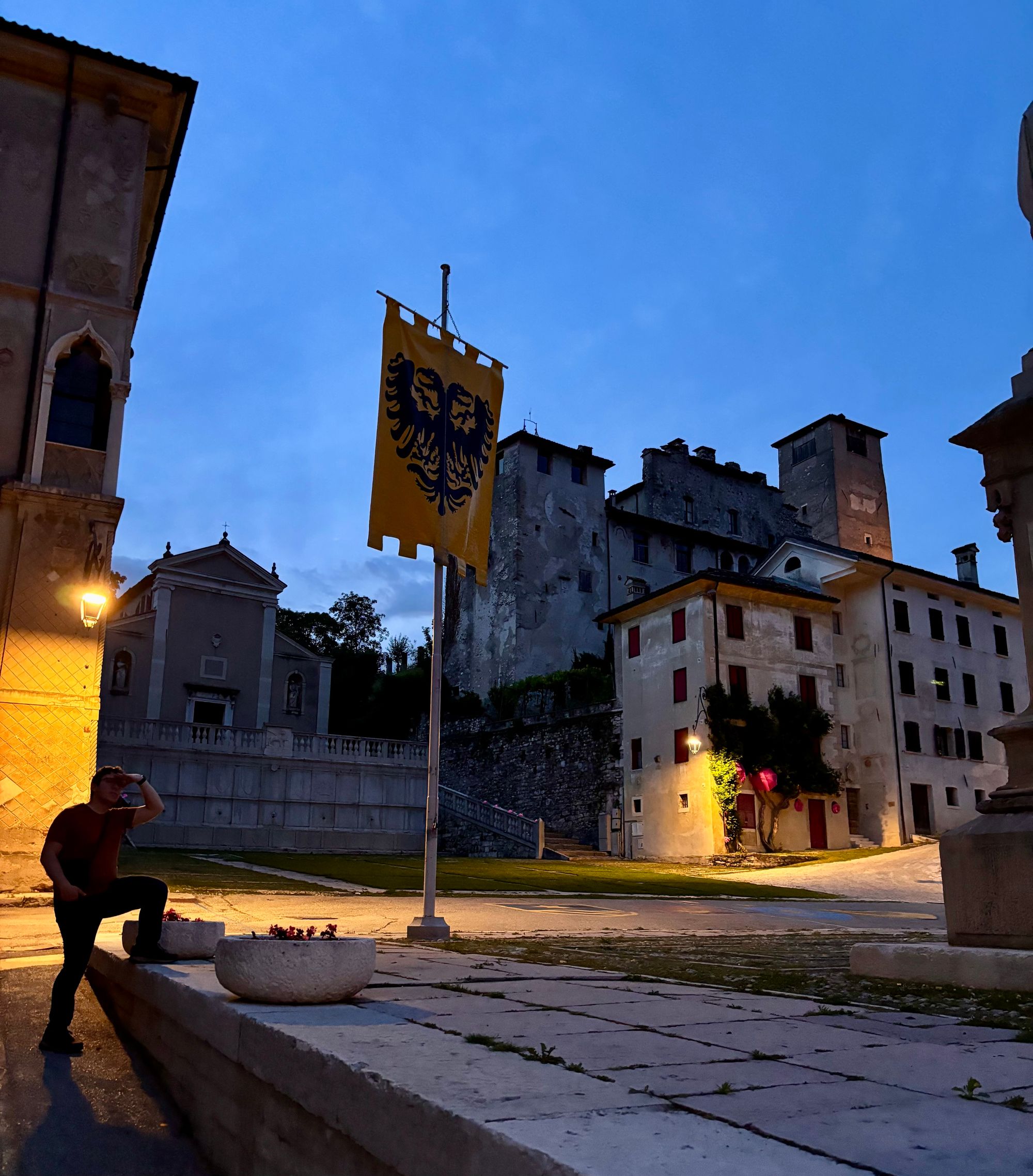
We also found out that there's a yearly competition in town called Palio di Feltre. Four houses compete in things like archery, horse racing, and tug of war. The flag of last year's winning house was displayed in the town square.
We returned to our Airbnb to spend the night, and in the morning had a chat with the hostess while having our colazione. She mentioned knowing a lot of Fantinel people in town, which, after seeing a bunch of gravestones with the Fantinel name in Feltre's cemetery, pretty much confirms that region as the home of some of my ancestors.
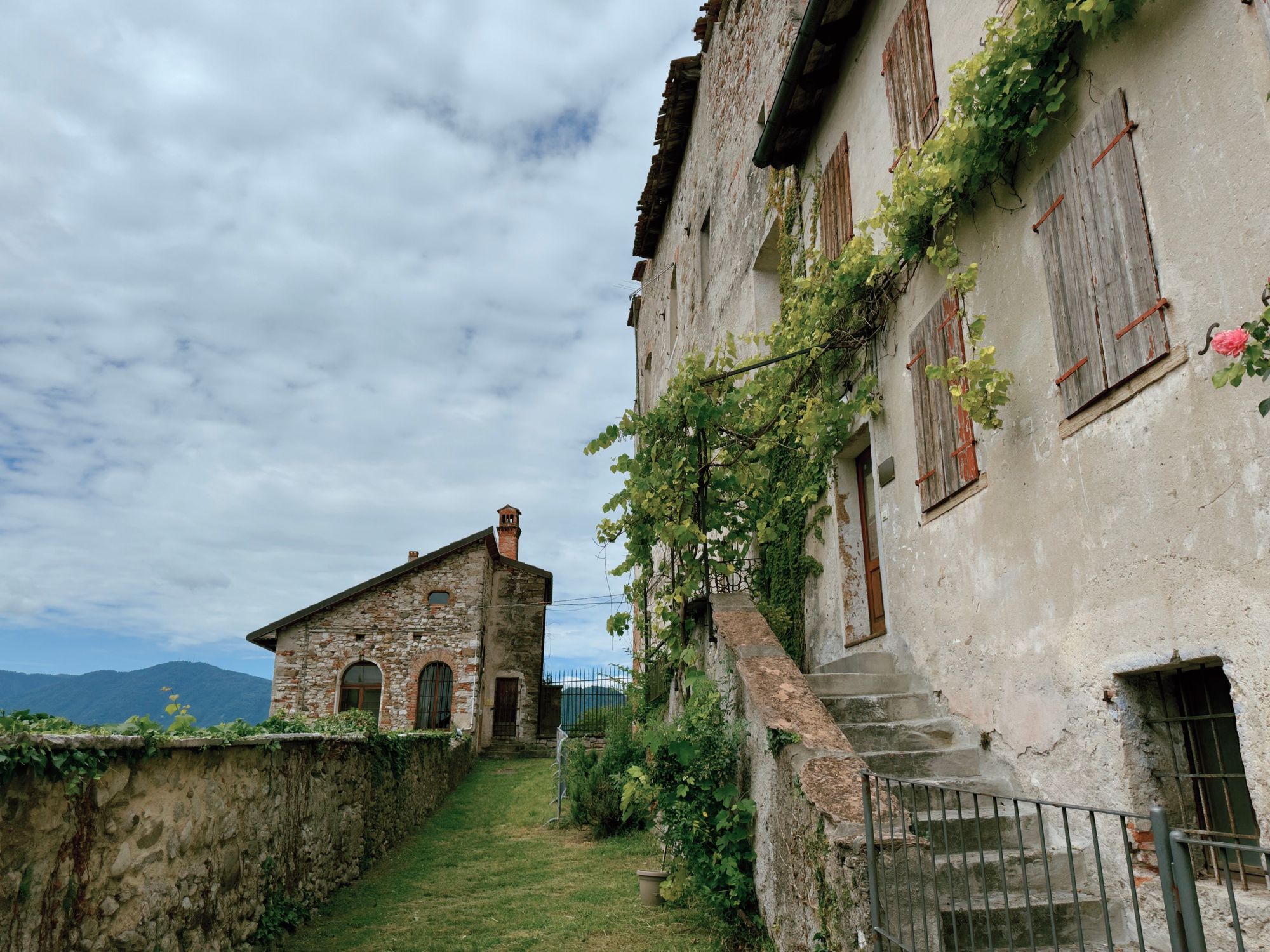
Before leaving, we decided to return to see the castle area during the day. So we climbed the hill and got inside the walls again. It wasn't as dramatic as it was at night, but it was still cool to see it all in real life. Being on top of a hill also meant there were some great views all around, too.
A familiar road
We had one last stop in mind before going home: the origins of the Stella family, which is my wife's surname (and which I proudly added to my name when we got married). While we were on our way though, we passed through a beautiful stretch of road that looked way too familiar.
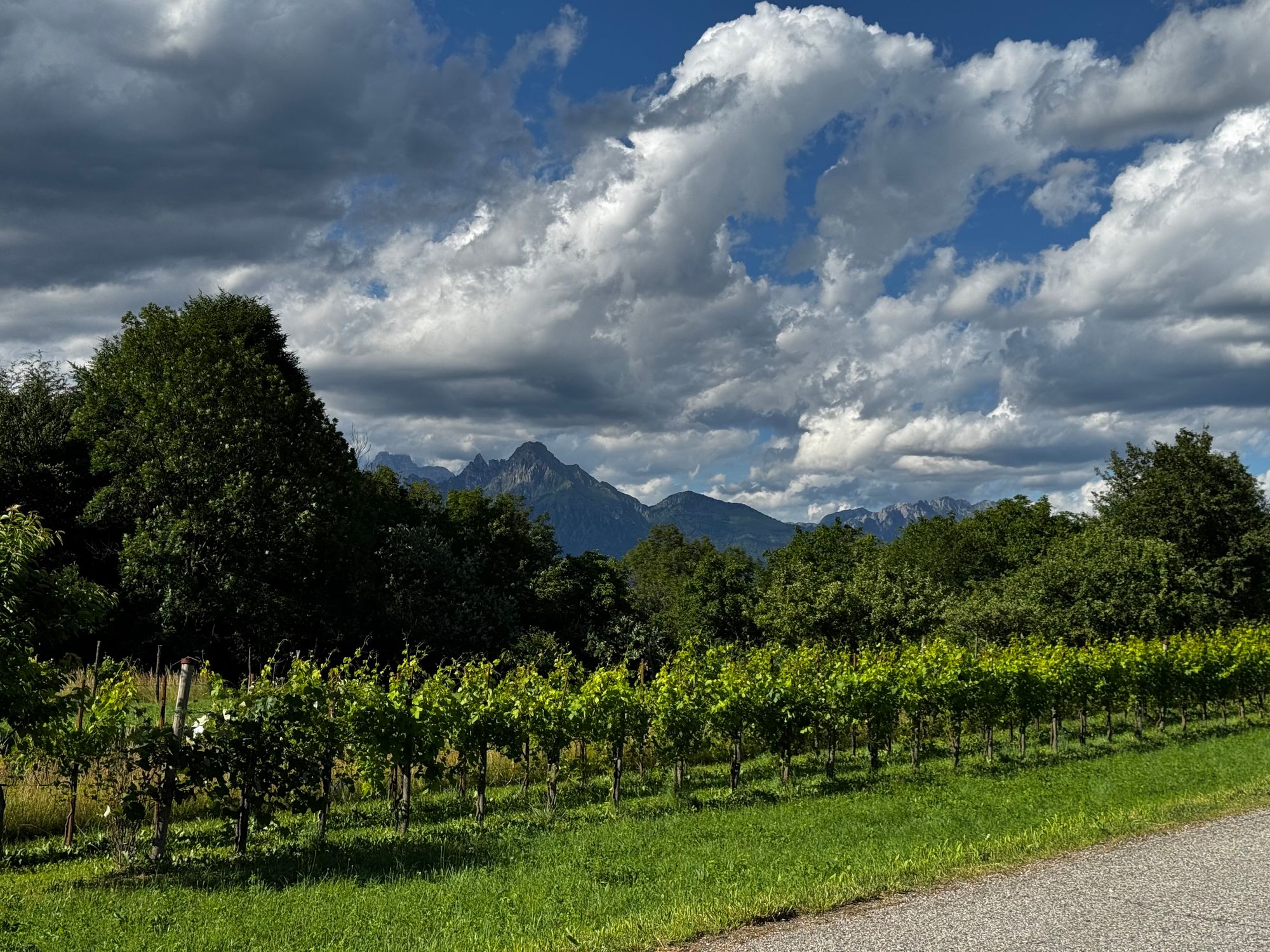
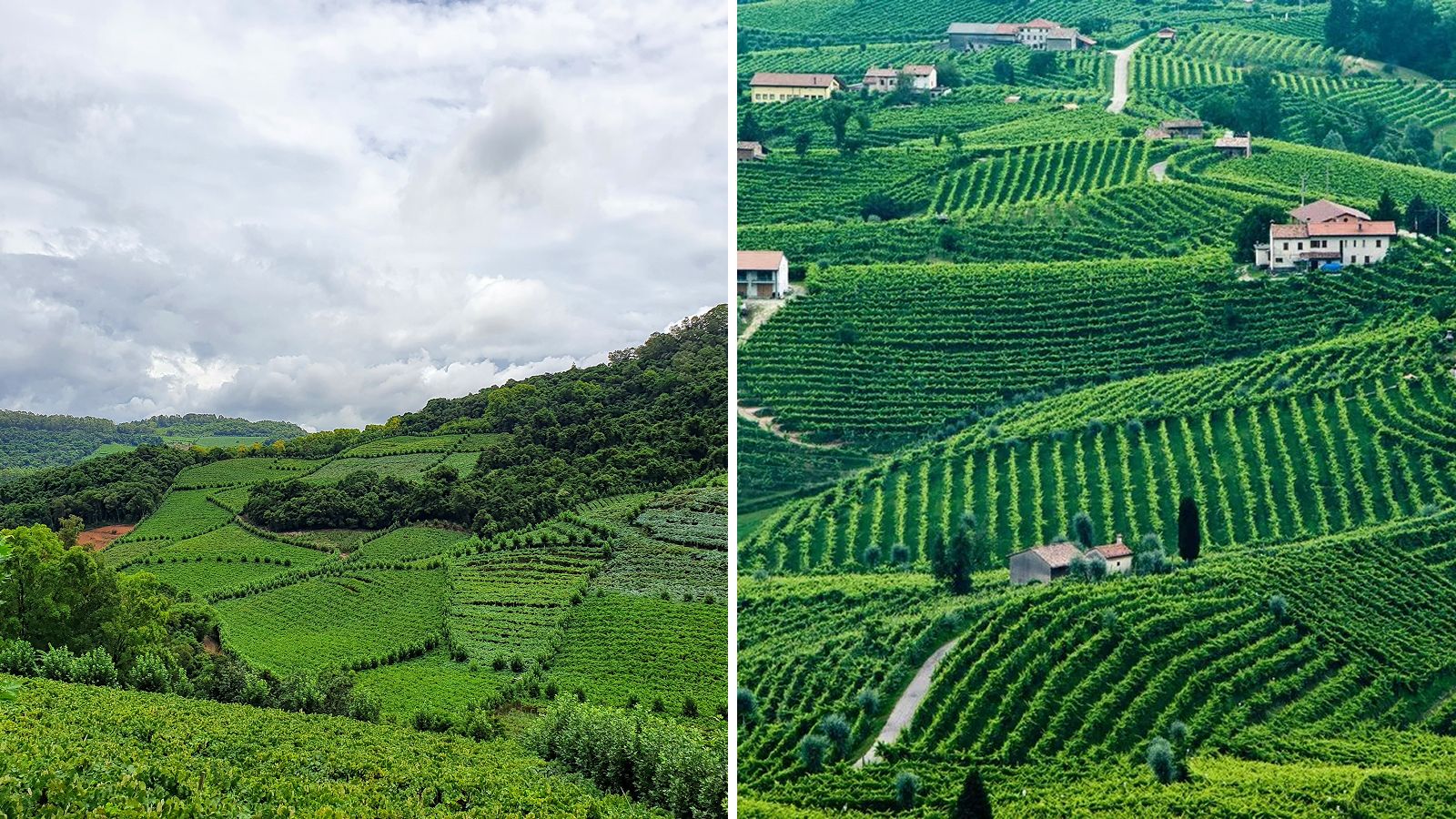
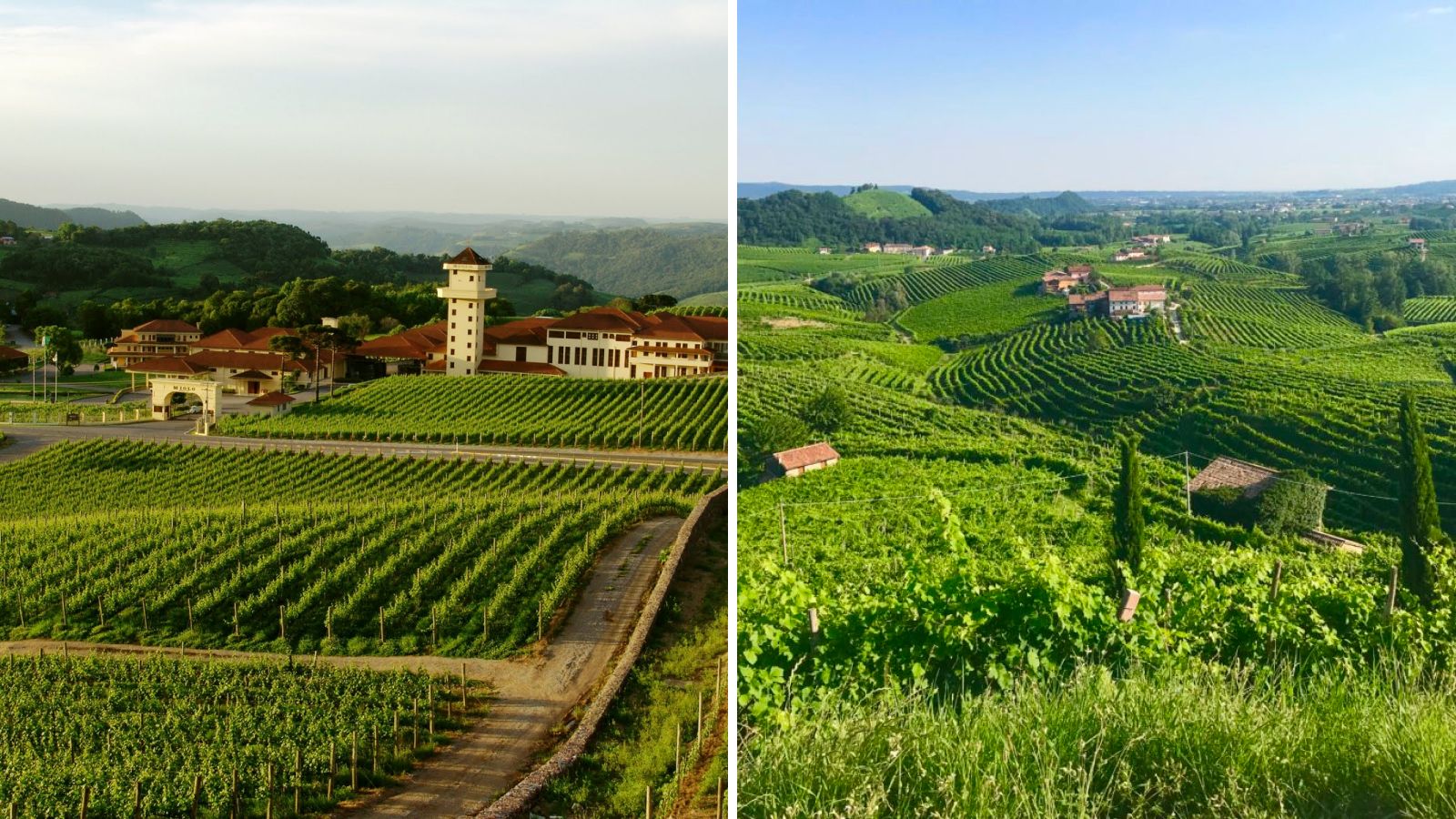
We found out later that it's a path called the Prosecco Road; Italy's oldest designated wine route, where apparently "the area is known for its family-run wineries and traditional winemaking methods". Huh, sounds familiar.
Going through that road brought up some emotions due to how similar it is to some of the roads in Serra Gaúcha, my home. A lot of that region was colonized by the Veneto immigrants and they built things the way they knew how. That, plus the similar geography (sans Dolomites) explains why the landscapes are so similar.
I couldn't help thinking about how curious it is that 150 years ago people left this place in search of a better life and ended up building somewhere so similar — a place I would eventually call home.
Pieve di Soligo
When we got to the home of the Stella family, we were surprised by how big the town was (at least in comparison to the others we'd been in). The church was huge and incredibly ornate; and it's the very church where my wife's ancestor was baptized. We even saw the baptism-bowl-thingy by the entrance!
We also found out that Stella is a huuuuge family there. Just like the Scopel were in Seren, Stella looks like one of the most common surnames in Pieve. We found out that there's a Cardinal Stella in town, we found out that there were Stella who were victims in both World Wars (one of them a Partisan who was captured), both commemorated in monuments there, and in the cemetery there were too many Stella to count.
After a while in the city of stars¹, we started the drive back home, a fortunately uneventful trip.
A worthy outing
When we planned our trip to Veneto, we were expecting a chill outing but had no big ambitions. But it turned out to be a really interesting one! We learned a lot of history, discovered places we never would have otherwise, and were able to connect more to the history of our families.
As immigrants ourselves, it's enriching to find out more about the immigrants we descended from, too. I'm really grateful for what they did many generations ago and for giving me the opportunity to be born in Brazil. I'm also sure they missed their home a lot, just like I miss mine.
1 - Stella literally means "star" in Italian. Ba dum tss
Did this blog post change your life? Or maybe I made a mistake that ruined your day? You can always send me an email to tell me about it.